

Deciding when to retire a critical piece of equipment is rarely straightforward, especially when the most important signs of wear are hidden. In mooring operations, this challenge is particularly acute. And that’s because one of the primary causes of HMPE rope failure – fatigue – is invisible to the eye.
With generic HMPE, this leaves you in the dark. But with Dyneema®, it’s different.
The Dyneema® difference
For one thing, Dyneema® SK78 fiber delivers at least three times more fatigue resistance than most generic HMPE, enabling ropes with a unique, built-in fatigue buffer that provides strength, safety, and reliability until the end of their service life.
What’s more, with Dyneema®, you don’t just have to take our word for it. We’ve carried out extensive testing and built our own proprietary, DNV-approved fatigue model. By calculating the real-world fatigue damage experienced by your ropes, we can predict their remaining “battery life.”
Here’s how we make the invisible visible.
Understanding the 3Ts
Fatigue is internal fiber degradation caused by repeated cyclic loading. But there are three important parameters that influence the rate at which this process happens:
- time under load,
- static or dynamic tension,
- and operating temperature.
We call these the 3Ts, and modern mooring conditions are putting increasing strain on ropes across all three of these parameters: lines are being used for longer, vessels are becoming larger and facing stronger winds, waves, and currents, and temperatures are rising. It’s therefore more important than ever to understand how the 3Ts interact – and what that means for fiber fatigue, rope reliability, and the safety of your mooring system.
In simple terms, it works like this:
It’s typically assumed that fatigue is linear with time , which explains why manufacturers advise a certain number of safe mooring hours for every rope. But in mooring, not all hours are equal. When the tension or temperature rises, the rate of fatigue accelerates. And when both tension and temperature rise, the rate of fatigue accelerates even more.
The challenge is that the severity of the resulting internal damage can’t be detected from external inspection or indicated by residual break strength testing. And that’s where our sophisticated modeling capabilities come into the picture.
Turning speculation into certainty
Based on rigorous testing at both fiber and rope level, and built using fatigue equations approved by DNV, our rope service lifetime model is fed by data on the actual time, tension, and temperature conditions experienced by a rope over its service history. Using this information, we can not only calculate the exact fatigue damage that’s occurred, but even give accurate predictions of the rope’s remaining service life, tailored to your operational conditions.
Accurate data on the 3Ts isn’t often available, and without it, it’s impossible to get a clear view of fiber fatigue. But there is a solution: sourcing ropes with a built-in fatigue buffer. And for that, there’s only one fiber you can rely on: Dyneema®
When you choose mooring lines with Dyneema® at their core, you’re choosing a unique buffer between point of discard and rope failure. You’re choosing unmatched rope reliability. And you’re choosing full control over your system’s safety, no matter the operating conditions.
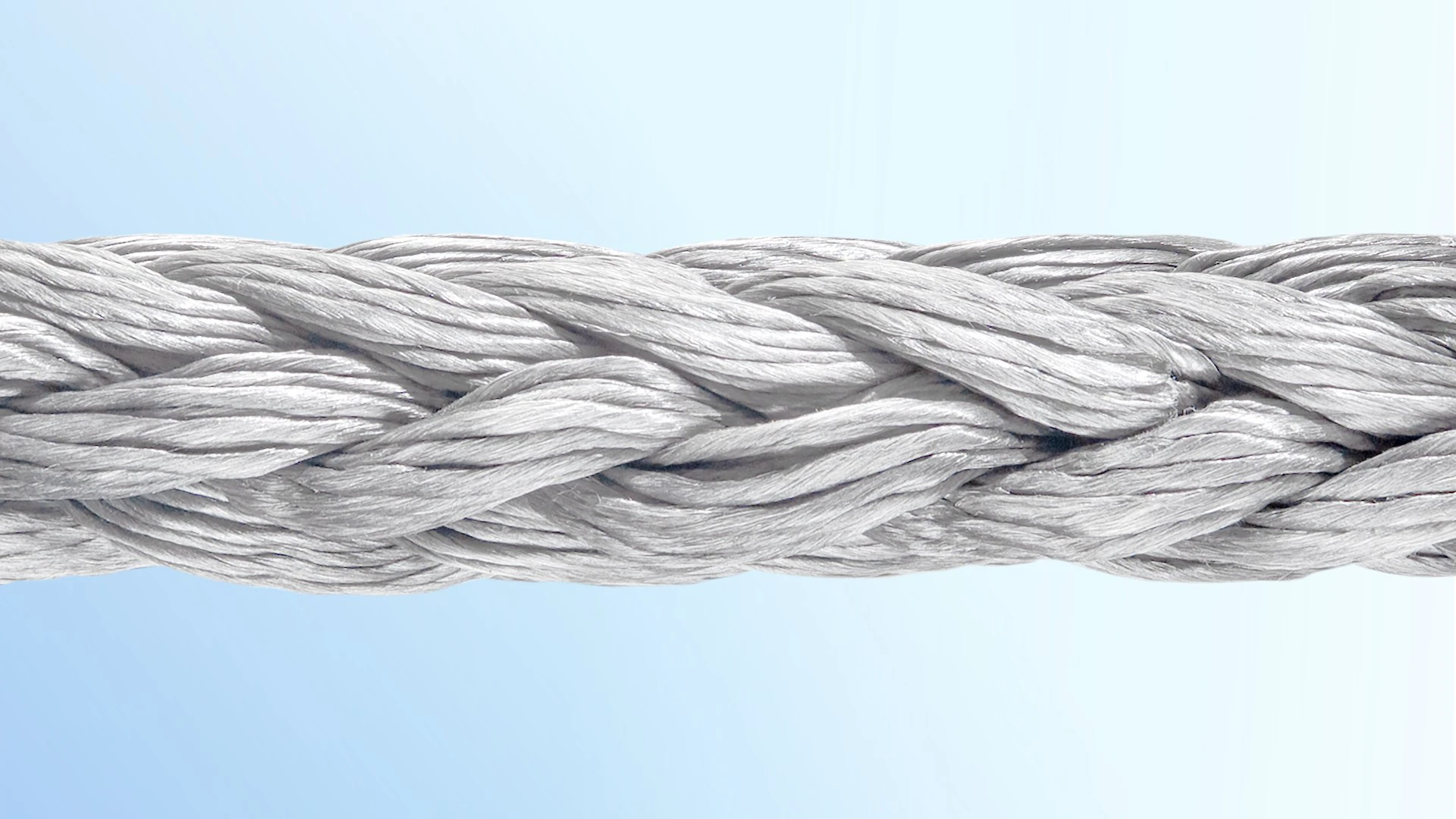
To explore the effects of the 3Ts and see how the Dyneema® fatigue buffer performs, explore our interactive fatigue visualizer. And for more information about how the world’s strongest fiber™ supports safer, more reliable mooring operations, contact our experts.
Get in touch
Want to learn more about our unique fatigue buffer and how Dyneema® makes the difference in the world’s best mooring lines?